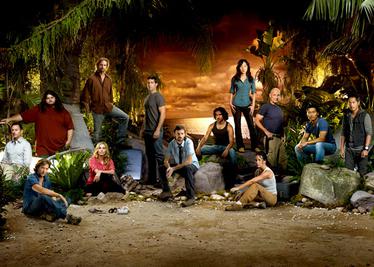
Showing posts with label tv. Show all posts

Friday, May 20, 2011

Some TV is Good for Our Kids!

Please enjoy this article about television use for our children.

The Selective Use of TV and Videos for Advancing the Development of Special Needs, Typical and Accelerated Preschool Children

Robert J. Doman Jr.
From The NACD Foundation, Volume 19 No. 5, 2006 ©NACD
TV/Videos and The Preschool Child

For over twenty-five years, the National Association for Child Development (NACD) has had the opportunity to serve a large, international caseload of children covering the entire functional spectrum. Our work with innovating ways to accelerate the development of children with profound developmental issues (such as brain injury, autism and Down syndrome) has provided us with significant insight into the development and education of typical and highly capable children as well. Because NACD trains parents to work directly with their own children, we are privy to the structure of the child’s day, diet, and free time activities as well as their developmental, educational and therapeutic input and opportunities. Our unique position has afforded us the opportunity to find out, quite simply, what works.

We have found that carefully selected television programs, commercially available videos, and individually designed videos can be powerful tools for advancing the development of preschool children across the spectrum—from the severely developmentally delayed to the highly capable and gifted.

Using Television to Develop Visual Function

Our years of working on ways to improve visual function have yielded a number of techniques of visual stimulation. Many of these techniques have proven to be helpful not only in the development of vision but also as educational tools. One of these techniques involves the use of television. Below we offer a brief explanation of some fundamentals of child development, and specifically visual development—including some common problems that occur—to provide a framework for understanding how and why television, properly used, can be an important tool for helping even very young children develop and learn.

To develop well a child needs to follow a specific path and to move through the normal developmental steps fairly rapidly. At each stage of development there are specific things that the brain is learning to do. The brain will tend to keep working at a stage until the next piece starts to kick in. Staying too long in one stage is not a good thing. In normal development we see all children start off life as visualizers, meaning that they think in pictures not words. They think in pictures because words have no meaning. In normal development the ability to process language starts kicking in within six months or so, and the child begins to think in both pictures (visualizing) and words (conceptualizing). If it all happens as it should, language starts to develop, and we end up with a good balance between the ability to think in pictures and the ability to think in words.

Vision develops essentially the same way in all children although at different rates. The peripheral vision develops first, followed by the central (macular) vision. You avoid running into doorframes with your peripheral vision; you see detail, and learn, with your central vision. When reading a book, you are using your central vision. When looking at someone across a table, you see their face in detail using your central vision while the rest of the room is slightly blurred because only the small circumference of that face fits within your central visual field. One good way to recognize your central versus peripheral vision is to recall the after-effect of a flashbulb going off in your face. Your macula, the area responsible for your central vision, is located in a small spot on your retina, and it is very photo/light sensitive. When that flashbulb goes off it temporally bleaches out your macula so that you lose your central vision. The spots you see are actually temporary blind spots where your central vision should be. The development of your central/macular vision is very important to many aspects of learning and overall development. Many of the problems exhibited by children diagnosed with developmental delays result from the lack of properly developed central vision.

Problems with Visual Function in Autistic Children

One of the most common characteristics of autistic children is the lack of development of the central vision. Autistic children do not make good eye contact—not because they don’t like you, but because when they look directly at you they can’t see you. Autistic children typically have hyper (enhanced) peripheral vision and hypo (diminished) central vision. Therefore, they experience the visual world more through their peripheral vision and less clearly or not at all through their central vision. They display this lack of visual development in another characteristic commonly associated with many autistic children: They don’t watch television. Many will stand directly in front of a TV and bounce or display excitement in other ways, but they are not “watching” the TV, they are “stimming” with the TV. Essentially what the child is doing is engaging in a form of repetitive sensory play that amounts to “playing with what is broken” in their vision (i.e., their vision is not functioning properly because the central vision is undeveloped, therefore they are playing with—and reinforcing—their peripheral vision only).

The Danger of Stimming—“Debilitating Sensory Addictive Behavior”

There are many forms of repetitive sensory play, and all fall under the informal heading of “stimming,” short for self-stimulating behavior. NACD has developed new terminology for this behavior, which we call “Debilitating Sensory Addictive Behavior,” because of the addictive nature of the behavior and how detrimental it is to development and even to the structure of the brain itself.

Children can engage in Debilitating Sensory Addictive Behavior with any “broken” or underdeveloped sensory channel. Engaging in these repetitive behaviors actually becomes addictive, much like an addiction to a drug. As the child engages in the behavior his brain produces endorphins—which are feel-good chemicals that can become as addictive as narcotics. The more a child engages in the behavior, the more endorphins are produced, and the stronger the addiction becomes. Unfortunately, not only is the child becoming addicted to a useless behavior, he is reinforcing what is already wrong with his sensory system. As described above, kids stimming with television are strengthening their peripheral vision and failing to develop the central vision.

Autistic children (and other children with visual delays) learn a variety of ways to “stim” with their peripheral vision. They often become adept at spinning objects or flipping anything that is not nailed down in an effort to get their “fix.” NACD has discovered, however, that although the TV typically provides an autistic child with an opportunity to “stim,” the TV can also be utilized very specifically as a tool to develop the central vision. Developing the central vision is the key to normalizing the vision so that learning—rather than stimming—can occur. TV is, in fact, such a great tool for the development of central vision that if it did not already exist as an instrument for entertainment we would have had to create it as a therapeutic tool.

Early Stimulation of the Central/Macular Vision is Crucial to the Development of Children within the First Two Years of Life

As mentioned earlier, all children’s vision develops pretty much in the same sequence. Peripheral vision first, followed by central vision. Typical babies begin life using their peripheral vision; then, as they receive specific opportunities/stimulation to use their central vision, it develops as well. (It is no accident that nature’s survival system for babies is designed to place them eight to twelve inches from their mother’s face when being fed and held.)

A typical baby deprived of specific opportunities/stimulation will be slow to develop their central vision, and if they are very deprived of these opportunities they are in danger of becoming globally developmentally delayed. To some degree all babies “stim” simply because early on it is the only thing they can do. If they fail to develop the global neurological maturity needed to engage in exploratory or play behaviors, they become increasingly adept at stimming, and their development slows or stops. Early stimulation of the central/macular vision is crucial to the development of children within the first two years of life.

How Reading to Your Child Stimulates Development: Vision, Language, Sequential Processing

It is often said that if you can’t do anything else with your baby, read to them. As most parents discover, “reading” to babies and very young children involves not so much reading text as it does looking at picture books with them, pointing to or directing their vision to specific pictures (or, if you will, teaching them to use their central vision). The closer something is to a child, the more the child’s central vision is engaged and the less peripheral distraction there is.

No one questions the importance of reading to children, but it is important to look at the development that occurs throughout the process. When you read to your child there are the obvious psychological/bonding /nurturing benefits. There are also very significant auditory benefits. Essentially, we use reading to teach children a “foreign” language—their first language. Initially we point to a single object and name it “puppy,” then we expand the information as the child’s receptive language skills develop, and it becomes “black puppy,” then “little black puppy.” We proceed along, matching visual information (the pictures) to the auditory cues (the words). In so doing we are not only teaching language, we are also developing a vitally important neurological function—we are developing the child’s ability to take in and manipulate pieces of auditory and visual information in a sequence. This ability to process information is called “sequential processing.”

NACD Innovates Methods of Developing Sequential Processing

At NACD we have been investigating and working on methodologies to build and develop auditory and visual sequential processing, as these are the basic components that give us access to our innate intelligence. (NACD has actually started an international initiative to raise the sequential processing skills of people all over the world through a program called “The Project 9 +/-2.”) We have found the act of reading to a young child—or showing a child pictures and naming them—achieves a vital step in the developmental process.

Stimulating Central Vision

How much does a young child learn from a book or picture card twelve to eighteen inches from their eyes as opposed to things placed further away around the room? NACD’s findings suggest that a young child learns a lot from things placed at the distance of a book being read, and much less from things across the room. When we bring a book up to a child we are pulling it into their central visual field. At twelve inches the child may be seeing a significant part of the page in detail, and with the peripheral field being limited it is relatively easy for the child to attend and to see the image. If you held a book out ten feet and had the child look at it, you would find the child’s attention would generally be much shorter and more difficult to hold because, at that distance, the child would have difficulty locating the image within his central visual field. This is because when attempting to see a small object held at a ten-foot distance, perhaps 95% of the child’s visual field would be peripheral, not central. Remember, peripheral vision develops before central vision, so for young children, particularly those under two years of age, their focus is constantly pulled to those things around the periphery. In other words, they are “visually distracted” or “distractible.” The more visually distracted the child is, the less she will pay attention to visual cues, thus the less attention she will pay to the information being “taught,” and the less stimulation and development of the central/macular vision will occur.

Will My Child Learn More in Preschool than at Home?

At NACD we have been privileged to work with some of the most motivated and informed parents in the world. All of the families we work with—be they parents of children with significant developmental issues or parents of “typical” children—wish to help their children achieve their innate potential. They come to us because they want to assume the primary responsibility for their child’s development and education. They want the best for their children and use schools and outside services only as an adjunct to what they do at home with their children. For many of these exceptional families one of their first big decisions is if and when to start their children in daycare or preschool situations.

Ultimately the answer comes down to the needs and resources of the family. But, one of the questions asked more often than not is, “Is my preschool child going to learn more at a school than at home?” The younger the child, the simpler the answer because the younger the child the more they need direct, one-on-one contact and interaction. The younger the child, the more specific the developmental/educational input needs to be. In general, nothing beats one-on-one teaching. Teaching one child at a time permits the input to be designed to fit the individual; it also permits virtually immediate modification of the input in response to the child. Most parents are not even aware of how often and how rapidly they modify what they are doing with their child when they are interacting one-on-one. For example, if you observe a parent looking at a book with their child you will see the parent constantly responding to the child’s cues. If the parent picked a book with more text than the child can process, you will see the parent start to simplify the story or even start just pointing at the pictures and talking about them; they may even put the book away and get another or go to something else altogether, naturally and spontaneously modifying the input to fit the child. The further you get from the 1:1 teacher to student ratio, the more difficult it becomes to provide children with the specific, appropriate input needed to stimulate their brains and maximize their developmental progress.

The Significance of the Learning Environment

There are tremendous differences in the quality of preschool learning environments.
Preschool children are easily distracted and have short attention spans. It comes with the territory. Preschoolers have short attention spans because their sequential processing skills have not yet developed to where they can process a lot of associated pieces of information. They can move from this to that, taking in little pieces and chunks of information, but they cannot attend to one subject for a long time if their processing is not up to the task.

The significance of the learning environment cannot be overstated for children at this age. The more distractions there are in the environment, the more difficult it is for young children to filter out the extraneous input and focus their attention, even if there is something in the environment that is appropriate to their learning level. How many adults would attempt to study new information in an environment containing the distractions that exist in a room full of preschool children and a lot of “fun stuff?”

Many parents ask about putting their children in schools and situations with other children so that they can learn from the other children. NACD recommends parents be very selective about such situations. The better organized and structured the environment is, and the fewer visual and auditory distractions in the environment, the better the odds are that any child will in fact learn something specific and appropriate.

Learning Occurs when Specific Input is Provided with Sufficient Frequency, Intensity and Duration—Random Input is Distracting

In any given environment a child will generally learn that which is being presented with the greatest intensity. Imagine a room with fifteen or twenty children where a few are playing in a sand box, a couple are looking at books, a few more are painting, a group are huddled around a teacher reading to them, and one is throwing a humongous tantrum because he can’t have the truck he wants. Guess what is being presented with the greatest intensity—and guess what is being learned? The reality is that for most preschool-aged children in a room with many other kids, a myriad of toys, and a lot going on, it is very difficult for them to learn what we would like them to learn. Learning/development occurs when we provide the brain with specific appropriate input, and the input must be provided with sufficient frequency, intensity and duration. Random input is distracting, and random extraneous input does not stimulate neurological development or the learning process.

Using Video Tapes to Teach

I have been known to tell parents to save their money and not send their child to the preschool, but to go to the preschool and videotape a child doing the things they would like their child to learn. Video tape a child climbing the slide, doing the monkey bars, riding the trike, drawing a circle, taking off their coat—doing any of the things they would like their child to learn from another child—then let their child watch it at home.

I used to do a lot of all-day seminars. We would start off with my speaking throughout the morning, then take a lunch break, and, because we had a lot of information to give the attendees in a day, we would show a video of me speaking during lunch. After lunch, we would follow up with me speaking live throughout the afternoon. A lot of me! After we had done a number of these seminars I started to watch the attendees during the lunch break, and it became evident that they paid better attention to me on the video than when I was standing in front of them. The videos were no great production—they were simply a talking head, my talking head, the same head they had been hearing all morning—but the audience seemed more focused and less distracted watching me on TV than when I was standing in front of them. Once we recognized this phenomenon, our first thought was that our society is in big trouble because we have become so trained to watch the tube that these adults were simply reflecting that training. (To some degree that may be true—I don’t think too many people would argue that the use of audiovisual media has been abused, particularly with children, and that the majority of the content is garbage.) But the answer was not so simple as that. We wanted to understand what was going on in the brain that would make people pay more attention to a person on TV than to the same person standing live before them. One of the questions we asked ourselves in order to find the explanation was, “Who does not watch television, and why not?”

Well, experience had shown us that many autistic children do not “watch” television; little babies do not watch television; many children with obvious visual issues do not watch television; many children with globally low developmental function do not watch television; and, except for brief moments on Animal Planet, my dogs don’t watch television. And what do all of these examples of individuals who do not watch TV have in common? They all have poor or underdeveloped central/macular vision.

As we looked further into this and explored the development of attention to television in our children, we came to the realization that television provides a unique form of visual stimulation. The images on television can only be perceived using central/macular vision; one cannot process the information on the screen with peripheral vision. Children with poor or underdeveloped macular vision do not attend to television because they cannot see it; the image provides them with no meaningful information.

NACD Discovers TV Can Be a Powerful Tool for Visual Therapy and More

We decided if we needed to develop central/macular vision then perhaps we needed a specific instrument that required the use of that vision—the TV. We started having parents sit in darkened rooms about two or three feet from the TV, with their “blind” or visually impaired, or autistic, or delayed, or simply young children, and we “taught” them to watch TV. For content we used whatever we felt would best attract the individual child’s attention. We used a lot of homemade videos of everything from Mom talking directly to the child to videos of themselves or siblings, to spinning objects and black and white shapes. We incorporated their favorite music and voices and in general used whatever we felt might attract their attention. In the vast majority of cases the children would first glance at the TV and then, generally, over a relatively short period start attending for longer and longer periods of time. Within a short time the children did start to attend to the television and develop their central vision. They then began to make eye contact, and look at books and pictures better, and in fact do all the things they should be doing with their central vision to learn about their environment. In autistic children we saw a significant decrease in the visual sensory play (Debilitating Sensory Addictive Behaviors) and a corresponding improvement in their overall function.

Not only were we discovering that the children’s visual function was improving, but because of the content we were using, the auditory and language skills were developing as well. Once we had the children attending to the TV, we started to experiment with content, and many of the programs we designed for families began containing various therapeutic and educational videos.

TV Screen Holds Visual Attention, Helps Brain Tune Out Peripheral Distractions

So, back to my mesmerized audience, why did they attend so well to the talking head on TV? We found the answer, once again, by working with our clients. As we began to use therapeutic videos, we were happy to see that many children learned exceptionally well using the methodology, but we were surprised to find that many parents were having the same experience I had at my seminars. The children were often attending better and learning better from the videos than when the family was actually presenting the information live! We were learning that not only is television a great tool for developing central vision in children, but it really is an outstanding educational tool.

Observing our audiences’ and clients’ responses taught us that television—and computer—screens provide stronger macular input than other images. As I am writing this article my vision is focused upon my computer screen. The screen offers such strong macular stimuli that my brain almost entirely tunes out the peripheral field. If I look up from my screen to my coffee cup, for example, not only do I see the cup, but also my vision gets pulled out to everything else that is cluttering up my desk because the cup does not have the same power as the computer does to hold my central vision. Now, when I switch off my computer screen and look across my office to a twelve-inch television (not turned on) that is sitting on my credenza, my vision is pulled to the books, pictures and various memorabilia I have on my shelves. The TV before it is turned on has no more—and probably less—power to hold my attention than most anything else. But, turn the television on and everything else goes away. If I turn the TV off again and look at the credenza, most everything there has the same ability to attract or detract from my visual attention. We can safely assume that for a young child who is just developing their central vision, the peripheral distraction they have to deal with is significantly more compelling than mine.

Videos are Powerful Learning Tools—Content Counts

As NACD learned to use therapeutic and educational videos, we encouraged families to make their own videos. These included close-ups of Mom saying words and emphasizing the various sounds heard in the English language; showing objects and naming them; filming animals and naming them; modeling directions being followed; modeling progressions in expressive language; modeling self-help skills; showing children how to crawl, ride a bike, and do long division. We have found this kind of video to be an excellent tool for stimulating development and teaching knowledge and skills.

In recent years, commercially prepared videos and DVD’s have been developed specifically for babies and young children. Some are really good, and some not so good. If the content is good—that is, it is teaching the child to identify a letter or a number, or to differentiate between a cow and a horse, or modeling appropriate actions and behaviors, that is all fine. I believe commercial producers are just beginning to scratch the surface relative to content, and they have a long way to go before they really understand the best ways to present the information. However, the tool exists, and it is powerful.

It is important for parents to understand that videos can be an extremely useful tool in the education of young children, but they should be selected carefully and used judiciously. There certainly can be too much of a good thing. And, any amount of a bad thing is too much! I personally find most children’s television programming to be horrendous. In the language of computers, “Garbage in—garbage out.” Content counts.

I also find that parents are spending far too little time interacting with their children. It seems our society subtly pressures parents to abdicate the responsibility for their child’s development and education to the “professionals.” I personally do not perceive most daycare and preschool programs as a good thing. So few of them recognize or provide an optimal environment for neurological development and learning. In our current culture they are a necessary reality for many families in which both parents need to work. However, we must not kid ourselves into thinking that having a two-year-old spend eight hours a day in preschool/daycare is a good substitute for quality time spent with parents. When it comes to helping young children learn and grow, the more one-on-one interaction the better.

Informed Parental Involvement is the Key to Good Child Development

I often comment that those of us who function reasonably well are lucky accidents, and those who don’t are not so lucky. The reason I feel this way is that most parents do not have much of a clue as to what pieces need to come together for their children to end up having their neurological act together, and, unfortunately, it appears most professionals do not either.

We can continue to throw more money at education, increase the hours children spend in school, and develop yet more reading and math programs that are not significantly different than the thousand that preceded them, but until we get back to parents taking a primary role in teaching their children, and acknowledge the necessity of providing individual attention and an environment that nurtures neurological development, we are going to continue to see our children fail to achieve their innate potentials.

To stimulate a brain—to teach a child—we need to provide specific, developmentally appropriate input. If we provide a child with appropriate input in an appropriate environment, not only will learning occur but the brain will learn how to process more information better. It is up to parents to make sure that information is of a quality that enhances the physical, intellectual, emotional and spiritual growth of our children. Parents who do so are their children’s heroes, and the children of such parents are our society’s hope for the future.

Reprinted from the Journal of The NACD Foundation (formerly The National Academy for Child Development)

Related Posts

Teaching Your Baby to Read
Jett "Reading" at 16 Months
Teaching Your Young Child to Read High Interest Bo...
Getting Your Baby to Communicate
Books to Read to Your Baby
BrillKids is offering discounts for Special Needs ...
Early Steps for Better Speech
Protecting Your Child's Hearing
Improve Your Child's Vision
Readeez Sale!
Some TV is Good for Our Kids!

Parent's Resources for Guidance on Down Syndrome
Get Your Own Neurodevelopmentalist


Wednesday, May 18, 2011

Fringe Season 1, a Review

It's no wonder that I love Fringe.  The show, created by J.J. Abrams, Alex Kurtzman and Roberto Orci, is about a team of investigators that solve crimes using "fringe science."  I describe it as X-Files meets CSI meets LOST meets Twilight Zone.  It's gruesome, sometimes disturbing, nail-bitingly tense, and often graphic, but it's one of my favorite shows out there now.

Part of the appeal is the pervasive mystery that grows with each episode.  While LOST was built on questions without answers, Fringe is built on questions with answers.  Each episode follows a typical pattern, starting with an off-POV that ends up with somebody dead.  The rest of the show deals with the investigators trying to solve the case.  However, since the cases are things that aren't generally in the realm of possibility, special investigators do the work.

FBI Agent Olivia Dunham (Anna Torv) works with the infamous scientist Walter Bishop (John Noble) and his son Peter (Joshua Jackson) to understand better what's going on and stop any more deaths.  Walter is one of the most famous scientists in the world, and the show begins with him sitting inside St. Claire's Asylum, where he's been prisoner for seventeen years after the accidental death of his lab assistant.  His work in the fringe science field has him released in lieu of his cooperation with the newly created Fringe Division.

What sort of crimes are we talking about here that fall within Fringe Division?  Crimes that are related to something called the Pattern.  For example, the pilot episode begins with an international flight landing in Boston and everyone on board dead, decayed and rotted away into foul looking blobs of flesh and blood.  Or maybe people crystallizing.  Or turning into monsters.  Whatever the case, the crimes are unnatural, a particular predilection of Walter's.

And even though the mysteries of the Pattern and its webs are highly entertaining and interesting, the even greater joy of Fringe is the characters.  Walter Bishop is hilarious.  He's crazy and says the most random things at the most random times, and his ability to think (ir)rationally--often aloud--makes for many memorable quotes.  Also, the relationship between Peter and his father is strained and awkward, perfect fodder for a television drama, and I enjoy watching it change and grow.  Dunham, arguably the shows protagonist, is also an interesting character, though she sometimes comes across as shallow and lacking.

While most episodes fall neatly into a predictable formula, the show is still an absolute blast to watch.  What's more is that Keisha has even fallen in love with the show, and I daresay she enjoys it as much as I.  We'll laugh at something Walter's said or muse at what's going to happen next.  It's great having another show to watch together like this.  Fringe is not LOST, even if Michael Giacchino* wants you to think it is, but it's similar enough that fans of the Island's mysteries would likely enjoy the show, and haters of the Island's lack of answers would be satisfied, too.

If you're looking for something to throw on your DVD queue (or ask your public library to purchase), then I recommend Fringe.  It's been delightfully freaky and amusingly tense, hitting all the right notes at the right times. 
-----

*There's quite a bit of very similar sounding music making up the score for both shows, and some re-use, even.

Thursday, June 3, 2010

Avatar: The Last Airbender, Season Two

AangKitaraSokka Last fall, one of my friends let me borrow Avatar: The Last Airbender, Season One.  He thought it would be something I would like, and he was spot on.  The show is about a young boy, Aang, who is the reincarnated Avatar, master of all the elements—water, earth, fire, and air.  Aang seeks to understand his awesome power and master the elements so he can finally stop the war that has raged across the world for over a hundred years.  With help from his friends Katara and Sokka, he travels abroad, uncovering mysteries and getting into frequent trouble.

It did not take very many episodes for me to like the show.  For one, the cartoon is beautifully animated.  It’s obvious that the artists are very skilled in what they do, and watching the show is rather cinematic.  Another thing that makes the show great is how funny it is.  The ill-luck some characters have (Sokka) and the clever script has me laughing nearly every episode.  The show also juggles other emotions quite well.  Shame and guilt, longing for something more, love, all of these are infused in this cartoon, and this makes it something more than just a basic toon.  Finally, the show has an excellent plot.  While not necessarily all original, the episodes are tight and all fit together snugly, never leaving the viewer curious for too long.  Plus, it borrows from many Eastern religions and cultures (mysticism, Buddhism, Taoism, etc.), and this cross-culture type of show is both educational and perfect for setting.

I write all of this because after I finished Season One, I had no way to watch the last two seasons.  My friend only had Season One on DVD.  So, I put in a request to the local library that they get the DVDs, and finally, they have got Seasons Two and Three. 

I’ve been watching Season Two this past week or so, and I still find myself laughing and mesmerized like I did for Season One.  The depth of characters for a cartoon show is amazing, and the cast is large.  Season Two deals with Aang, Sokka, and Katara traveling to find an Earthbender to teach Aang, and after they find one, learning to Earthbend.  Along the way, Sokka discovers a clue that will help bring down the Fire Nation, something happens to Appa, and one particular character has a metamorphosis that was long in the making.  With the last episode of Season Two, “The Crossroads of Destiny,” I was excited to see how all of the characters would interact together.  By the end, I was flabbergasted and slightly angry.

I’m looking forward to checking out the concluding season from the library and seeing the rest of the drama play out.  If you’ve never watched Avatar: The Last Airbender, do yourself a favor and rent/Netflix (I guess Netflix has them.  I dunno, I don’t have Netflix, either.)  them right now.  There’s a live-action film coming out sometime based on the series, and hopefully it’ll turn out okay.  Right now I’m a bit perturbed at the casting choice, but from what I’ve seen so far, it will hold true to the show.

AvatarAirbenderBook2

Thursday, March 4, 2010

The Beautiful Account of Thursday and the Shiny New Pickle

Why yes, it is a beautiful day outside today.  The sun is up.  The sky is blue.  It’s beautiful and so are you, dear Prudence.  Got some great music playing through the iPod, got a nice USGS Quad map in front of me.  Got me a Jonagold apple waiting.  Got a date with a sweet, lovely lady tonight.  What else could I ask for?

“Ask for a pile of coconut shavings, Logan!”

Yeah… I don’t like coconut stuff, though. 

If you think you might like some indie folk music, I strongly suggest trying out the Mumford & Sons album Sigh No More.  It’s currently $7.99 on Amazon as an mp3 album, which is available here.  The album has a wide range of sounds, from simple acoustics to a full-fledged background band.  The singing is exceptional, as the band is British, and the lyrics are powerful, especially when coupled with such awesome music.  (One of the best songs, “Little Lion Man,” has the F-bomb in the chorus, if that sort of thing rankles you.)

Keisha and I recently started watching the re-imagined Battlestar Galactica.  From my understanding, Battlestar is one of the finest sci-fi television shows ever.  The writing is superb.  The action is intense.  The characters are completely believable and real.  The imagination is futuristic, yet familiar.  Overall, I’ve really enjoyed it so far, and I hope the rest of the show stays up to my expectations.

We’re going to watch Shutter Island tonight.  Keisha doesn’t do scary movies, so this should be fun.  I’m expecting some intense moments.  You should expect a review.  Maybe.  Maybe you should expect a jar of pickles.

“I said ask for a pile of coconut shavings!”

I read the hilarious Stuff Christians Like blog, which basically pokes fun of many things in the Christian culture.  From there I found a few other blogs I liked, and one of them had this video the other day.  They created it.  I laughed.  You should too, especially if you have a house dog.
Keisha gave Stella a bath last night.  I dried her off.  We use the hair dryer.  It’s funny.  Then we clipped her nails.  It’s not funny.  But it kind of is.  She always feels like a giant warm cotton ball after she’s had a bath, so that’s nice.  And she runs around and around and around playing afterwards, too.

On to work.  Time to figure out what the heck this stuff means.  Or at least try to.  When life hands you lemons, make pickle juice!  (Okay, that’s just nasty.  I’d rather have… coconut shavings.)

Friday, January 29, 2010

A Daily Dose of Aimlessness; A Taste of Things to Come

First—the taste!  Oh sweet, sweet taste, like a warm and gooey Pop-Tart® on an oatmeal-less morning.  Like Sarah McLachlan fumbling towards ecstasy, only to find that it’s not really Sarah McLachlan or ecstasy, but the Great Somnambulist eating a warm and gooey Pop-Tart®.  Finally the long wait draws near an end.  Soon, oh so soon, does it begin anew, afresh, again.  I’m talking about Lost’s final season, folks, and I think it’s obvious I’m excited.

Here on Rememorandom I’ll likely be postulating my theories on each episode.  For those of you that read my blog and don’t like Lost, you’ll likely not read these posts, and that’s fine by me.  I’d rather you not than have the greatest show on television ruined for you.  For those of you that watch Lost religiously, like I do—where you demand absolute silence, high-definition, crisp audio, a bag of popcorn, a comfy seat, a beautiful spouse, and a wonderful puppy—then I hope you find it in your heart to postulate with me.

That’s the beauty of Lost.  The fandom is huge.  The enthusiasm of the fans is overwhelming.  The creativity of the fans is inspiring and wonderful.  Check out The Lost Underground Art Show if you want to see some awesome fan art, which was commissioned by Lost’s producers.

Hoist up the John B. Sail!  (Is that an acceptable transitional phrase?)  I went to the gas station yesterday and bought a pop.  The lady in front of me bought a lottery ticket.  She won $500.  The cashier gave her 25 $20 bills.  The winner, an elderly lady, didn’t look very excited.  If I’d’ve been her, I probably would’ve been jumping around the gas station like an excited bunny rabbit, glad to be emancipated from the vile clutches of the Evil Cage.  But she didn’t seem like she cared.  I cared.

Hoist up the John B. Sail!  (Uh?)  I got my guitar fixed.  For free.  I took it to a different shop and the guy looked at it, fiddled with it, turned some knobs, plugged it up, and it worked.  He said dust was likely the culprit.  And to think, the local guy wanted to charge me $50 just for looking at it.  Sheesh.

Hoist up the John B. Sail!  (I still don’t know if that’s an ok transy phrase.)  My love affair with parentheses (totally the coolest of all punctuation marks) will never end.  (Why should it?  Supplemental, useless information is always welcome here.)

Hoist up the John B. Sail!  (I don’t care.  It’s a great transition.)  I did something last weekend that I haven’t done since The Legend of Zelda: Twilight Princess, which was 2006.  I reserved a video game.  Final Fantasy XIII.  The game looks beautiful.  And it’s enormous.  And it’s Final Fantasy.  I bought XII but I’ve never had time to sit down and play it.  One day, hopefully.  Anyway, I’m looking forward to playing the game.

Hoist up the John B. Sail!  Jai guru deva om.  Nothing’s gonna change my world.  I finished Firefly last night.  So sad.  I know I’ve already said it, but I can’t see why the show was canned (other than Fox’s horrible choices of airing episodes out of order, among other things).  Each character was memorable and intriguing.  There was humor.  There was camaraderie.  There was a vast universe to explore and a load of story to uncover, but it all vanished.  There’s nothing to do about it now except watch Serenity and hope it wraps up some of the loose ends.

Hoist up the John B. Sail!  I took the test to get on Jeopardy last night.  I made homemade shrimp scampi, which wasn’t the best ever, but definitely not the worst, either.

Hoist up the John B. Sail!  Goodbye JD Salinger.  Thanks for making a great and inspiring novel.  Catcher didn’t have a huge impact on me, like it did so many others, but it did help some world-view thoughts start a-churning in the head.  And reading it as a teenager was perfect.

Hoist up the John B. Sail!

Thursday, January 28, 2010

Find Him! Bind Him!

First off, I strongly recommend that you listen to this song right here.  It’s by The Decemberists and titled “The Mariner’s Revenge Song.”  To my knowledge there is no official video, but I thought this production was pretty good.  The song style, words, and music are all akin to a classic pirate’s shanty and the story is most entertaining.  Go on.  Watch it.  You know you want to.  I can almost guarantee that you’ll smile from ear to ear from the wickedly delightful lyrics.  And, if you can listen to it and not feel like you’re on a pirate’s vessel, then you win today’s prize.

Well?  Whaddya think?  If you’re like me, after listening to it a few times I had to track down the lyrics and read the entire tale myself.

Second off, I have three episodes of Firefly left.  I knew I would like the show from the onset, and I knew it was going to end prematurely, but still I can’t help but wonder how something like this could get canceled?  It’s definitely better than plenty o’ other crap that makes it to tv.

Thirdly, I got an email from the library telling me Best Served Cold was in and on hold for me.  Of course, I just started reading Ted Dekker’s Green, so I’ll go pick it up and hopefully finish Green quickly enough.

Fourthly, here’s an interesting blog post by Al Mohler.  It discusses how many abortion workers turn to pro-life after years of work.  Sad, but encouraging, methinks.

We’re in a winter storm warning until tomorrow night or Saturday or something.  Expect 1-4 inches or something like that, so it’s said.  Who knows?  I know brevity is in order now.  There’s much afoot and I must hasten on.

Find Him.  Bind him.  Tie him to a pole and break his fingers to splinters.  Drag him to a hole until he wakes up naked, clawing at the ceiling of his grave…  I hope you gave it a listen.  So it goes.

Tuesday, November 24, 2009

Desultory Thoughts About Diddly Squat

There are times in life when you feel like Bono, walking through the empty streets of London searching for something that you can’t find, knowing that you never will find what you’re looking for. Or maybe you feel like a scarecrow that’s scared of the crows, which is really quite inefficient. But we’re talking kings and successions, even you can’t be caught unawares.

Don’t you hate it when the book your reading turns out to not be what you’re expecting? It’s like taking a big drink of pop, expecting the full richness of Mt. Dew and instead getting Coke or tea. While there’s nothing wrong with Coke or tea, there’s nothing good about that false excitement and sudden revulsion, either. Treasured is about finding tangible reminders of God’s active presence in our lives through life stories of the author. So far, I feel like I’m reading chick literature, which is a definite let down. Maybe it’s because I’m still coming off the high of Last Argument of Kings?

So prepare for the coup of the century, be prepared for the murkiest scam. Have I ever pointed out my favorite Disney movie of all time? It’s Aladdin. I love it. The comedy still cracks me up every time I watch it. Genie and Al are too funny. I’m glad Disney made good cartoon movies back then instead of this weird stuff they’re making now. My second favorite Disney movie? You’d never guess it in a million years.

Meticulous planning, tenacity spanning… Where does that leave us? In the dregs of the soup bowl? In anticipation for Thanksgiving? In the throws of the soul of music, floating on like Modest Mouse? We look into the mirror and see not ourselves staring back but the Witch King of Angmar, blade aglow and flail a-ready. (You have to admit, his design is awesome.) Startled at the sight of the Black Captain, we jump back and stumble into Outkast, which startles them into an outburst of “Hey Ya!”

Decades of denial is simply why I’ll be king, undisputed, respected, saluted, and seen for the wonder I am. Tearstained cheeks with mascara streaks make us all eke out own. The terror of everyday living, of everyday knowing, is enough to drive even the stoic up the wall of emotion. There is no sanctuary. There is only Australia, the last great hope for man. How sad would I be if I dropped my favorite coffee cup, the handcrafted one from the pottery place, and it shattered at my feet?

Yes, my teeth and ambitions are bared. The Ciabatta sandwiches for supper last night were really good. Heroes was okay, but only okay. Big Bang Theory was funny, as it always is. I was eschewing Black Friday deals (I have to work), but I saw that Best Buy is selling Fallout 3 GOTY Edition for $20. I can’t pass that up. They’ve also got Dragon Age for $40, but I think I’ll let that one slide for now. Of course, on the flip side, I always have my calculus.

Be prepared!

Thursday, September 24, 2009

FlashForward Thoughts

Last night, ABC premiered the new series FlashForward. The show is about dealing with the aftereffects of a global blackout. Every person in the world blacked out for 137 seconds, and during this time they had visions of the future. Due to the blackouts, millions of people perished. This series is based on the novel of the same name by Robert Sawyer.

I find the idea behind this show fascinating and full of potential. An underlying theme to the show deals with can the characters change the future they see or are they destined to act the part they saw? While this idea is not original, the mechanics certainly are. What caused the blackouts? Why did everyone have these visions? Will it happen again?

The pilot episode was well done, and the characters were well written and cast. If each episode is as intriguing and exciting as this episode, then I think this series will be fantastic. If you missed the premier, ABC is airing it again tonight at 8:00pm EST, or you can watch it at abc.com.

I'm not sure how the series will progress, but I have faith that it will be great. Plus, it gives me something to do while waiting for Lost to come back on next Spring.

Friday, April 3, 2009

Lost Recap


This season of Lost has been very exciting for me. I've watched the show since it started, and I've loved it ever since. Sure the series has had its poor episodes, but there have been far more interesting and great episodes than otherwise.

Season 5 started out pretty rough, but it has consistently been very entertaining. With the survivors finally back on the Island, albeit in 1977, things are getting very interesting. We finally see some of the history of the Island being explained, especially between the Hostiles and the Dharma folk. The mystery of the Island is still very much alive, constantly growing.

The last episode, "Whatever Happened, Happened," was one of my favorites of this season. Although it was a Kate-centric episode, and I'm not a fan of Kate, everything that was going on On Island was pure entertainment. The flashbacks served to provide some insight to Kate's On Island actions, which currently is to save Young Benjamin Linus from a gunshot wound. Ben was dying, and Juliet requested for Jack to help her, but Jack's pride prohibited him from helping. As such, Jack's inaction led Kate to taking Ben to the Hostiles for help. While there, Richard Alpert warned Kate (and Sawyer) that by helping Ben he would be forever changed. He would lose his innocence. Kate and Sawyer agreed, and Ben was carried off into the Temple by Alpert.

The next scene was beautiful. The Old Ben wakes up from his injuries and comes face to face with John Locke, the very man Ben murdered. Locke says, in his kindly voice, "Hello Ben. Welcome back to the land of the living." The episode ends, and we are given a preview to next week's episode, which looks like it may be one of the greatest of the shows history.

Lost is such a great show for many different reasons. I love the allusions to pop culture, to literary classics, to philosophers, to mythology, and to religion. The mystery of the Island perpetuates the shows success, but also the mystery of the characters. Each person has their own story and their own mistakes, and the Island forces the person to make choices. Have faith and change, or stick with logic and remain unchanged. These ideas, while not original, are still fun and entertaining.

For an excellent blog to read on Lost, which is updated weekly, check out this site. These guys blog about all different sorts of things on television, but I particularly like what is said about Lost every week. For a wiki site of Lost, which I find myself referencing quite often, I recommend checking out this site.

As I've said, I am really enjoying this season of Lost. It's not as intriguing as the first season, but it still is top quality television, unlike Heroes, which seems to be taking a turn for the worse.

Tuesday, March 10, 2009

Arrested Development


I've just started watching Arrested Development. All I can say is that I've been very non-productive for the past couple days, and I finished Season 1 last night. Several of my friends have recommended the show to me, but for some reason it kept slipping my mind to check it out until about a week ago. I don't know if there has ever been a show to rival its humor and I'm not sure if there ever will be again. The entire plot, the demise of the Bluth family, is so twisted and awkward, and somehow driven by love and selfishness, that I can't help but laugh several times each episode. There have been several moments where I've had trouble ending the laughs. Even as I write this I can think back to certain situations and bust out laughing (and I'm sitting in the middle of my computer lab on campus!)

It's hard to pick a favorite character, as they all have an amazing uniqueness and charm about them.

Michael: The good son of George Sr. Michael is motivated by love for his family, to provide for them and keep them safe (and usually out of jail). The protagonist of the show, but not the funniest character.

Gob (George Oscar Bluth, II): The eldest son of George, he is a magician, and definitely one of the funniest characters on the show. He is driven by selfish desires, namely that to succeed and be better than Michael, or anyone else in his family. He has the funniest quotes and memorable lines, in my opinion.

Buster: The awkward son of George, Buster lives with his mother off-and-on, and he is not exactly solid in the head. Buster is motivated by his mother and his desire to make her happy, but also to find acceptance and sugar. Buster provides slapstick comedy to the show, and the awkward humor as well.

Lindsay: The only daughter of George, Lindsay is typically driven to make sure that she is in the spotlight. She is an avid protester and picketer, though she often does not care what she's protesting or picketing. Lindsay has some funny moments.

Tobias: The son-in-law of George, Tobias is married to Lindsay and he is as awkward as Buster. Tobias is heavily played to portray homosexual tendencies, which is typically obvious to everyone except himself. Tobias is a nevernude, which is exactly what it implies. Tobias has several very funny moments and quotes.

George Michael: Michael's son. George Michael fell in love with his cousin, Maeby, during the first episode when she kissed him to get even with her parents. George runs the Banana Stand and is mostly motivated to gain Maeby's attention and to get his dad's approval.

Maeby: Daughter of Tobias & Lindsay, Maeby is driven to get her parent's attention/ to not have her parent's attention. Maeby is constantly scheming to get even or to not get even with her parents. She's not necessarily a funny character, but she provides an impetus for George Michael to get into funny situations.

George: The paterfamilias of the Bluths, George is serving time in prison for so many reasons it's hard to pick one. He is motivated by selfishness, corruption, and love for his family. George provides several memorable quotes and funny situations.

Lucille: The mother of the Bluths, Lucille is often cold, sharp-tongued, and intoxicated. She loves her children, though it is rarely seen.

Onyong: The adopted Korean child in the Bluth family, his name is actually Korean for hello, though the Bluth's do not realize this.

In all, the entire Bluth family is best taken together. They live and feed off of each other, and the comedy is layered and ingrained with them all. As a family, they are extremely dysfunctional, but they provide wonderfully funny situations for laughter. I'll end with a funny quote by Gob.

"The zero hour, Michael. It's the end of the line. I'm the firstborn. Sick of playing second fiddle. Always third in line for everything. Tired of finishing fourth. Being the fifth wheel. There are six things I'm mad about, and I'm taking over."

Thursday, January 22, 2009

LOST S5 E1 & E2 Reflection

For those of you that don't know, I am a huge LOST fan. For those of you that don't know, LOST is a television show that comes on ABC about a group of plane crash survivors and their quest on a mysterious island. For those of you that don't know, a television, or tv, is a gateway into another world...

Anyway, I am a huge fan of LOST. I've watched it since it premiered a few years ago with Season 1. The island has waged so many mysteries that my mind cannot remember them all. The character relationships with each other, in the past and present and future, are intriguing. The definition of good and evil and faith and science are all very questionable, and ofttimes it's hard to know how to describe accurately any character. You may think they are acting one way, when their intent is something completely different.

<{<{WARNING: BELOW WILL CONTAIN SPOILERS. IF YOU HAVE NOT WATCHED THE EPISODES THEN I WOULD NOT RECOMMEND READING.}>}>

But this post isn't a post about why I like LOST. This post is a reflection of last nights episodes, "Because You Left" and "The Lie." The post-island Oceanic 6 have all slid into depression/madness/paranoia, and they all are acting differently than they were when on the island. Ben is wanting to collect them all, including a dead Jeremy Bentham, and to try and return to the island. The folks that remained on the island are now going through a space/time warp, traveling both frontwards and backwards through time. Daniel Faraday emerges as a leader (which I approve of) and attempts to explain this to the viewer. A good summary of the episodes is this: things get crazier and crazier on and off the island.

I enjoyed the episodes mainly because I've been dying to watch LOST since Season 4 ended last Spring. The story is still intriguing me, though I feel that its complexity may be losing viewers. People sometimes want a normal story. LOST is far from normal, as its creators tell the stories from many different and unique perspectives. I think Season 5 looks promising, but probably won't be as good as the earlier seasons. But my hopes are high and my expectations realistic, so I think I should be fine.

Monday, November 17, 2008

Heroes

Several people have recommended to me the ABC show Heroes. Finally, I decided to try it out. I rented the first 3 discs of Season One, spanning episodes 1-10, and I have thoroughly enjoyed the show thus far. I've always loved comics and such, and this show's character's are completely likable. Anyway, I just thought that I'd throw a quick "thanks" to everybody that recommended the show (Bill, Brian, etc.) and let you know that I am very glad to be watching it finally. Have a cold night, folks.

Post Script: By the way, if you look at the word for very long, it's one of those words that start to look funny and made-up. You know, like, roads. The more you look, the more you're convinced that it's misspelled.